

From July 2, 2026 to August 29, 2026
Reisingerstraße 6 Rgb, 80337 München, Germany
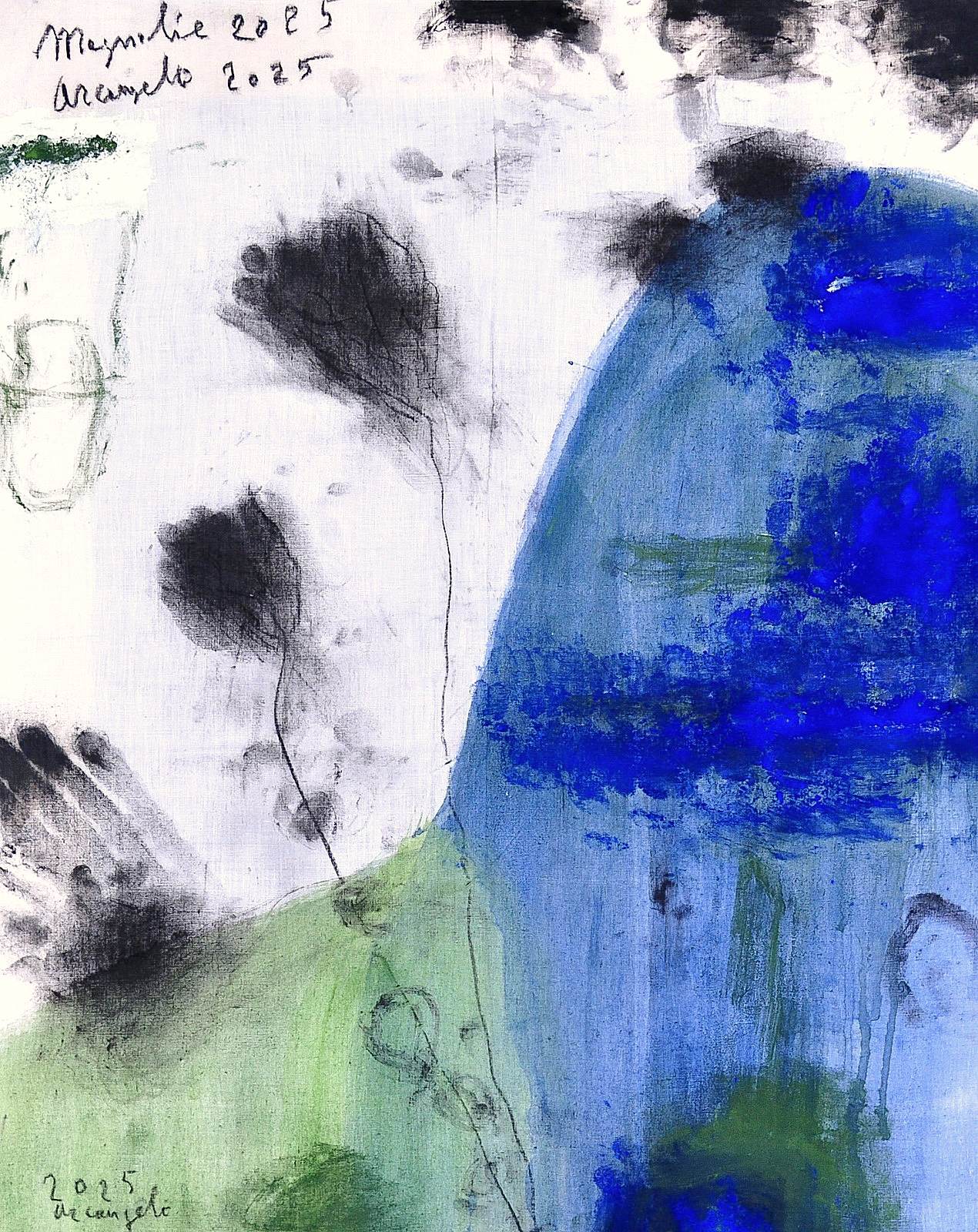
Arcangelo, Magnolie, 2025, Mixed Media on Canvas, 74 cm x59 cm
Terra mia holds a foundational place within Arcangelo’s oeuvre, it was the starting point of his artistic research. In these early works, painting emerges through a direct engagement with matter: earth, natural pigments, layered surfaces, and incised marks form a visual language in which the landscape of Irpinia is not depicted but
experienced as substance, memory, and origin.
From Terra mia, a number of subsequent bodies of work unfold, extending these concerns without ever abandoning them. Each series revisits the relationship between painting and the earth, gradually shifting the language of the work from dense materiality toward more distilled, symbolic, and atmospheric forms.
In Arcangelo’s practice, nature is never a subject of representation but a material and perceptual presence. The exhibition Ubi terra floret at Galerie Tanit in Munich sharpens this perspective: painting does not describe the landscape but generates it through tension – between depth and surface, density and light, rootedness and emergence.
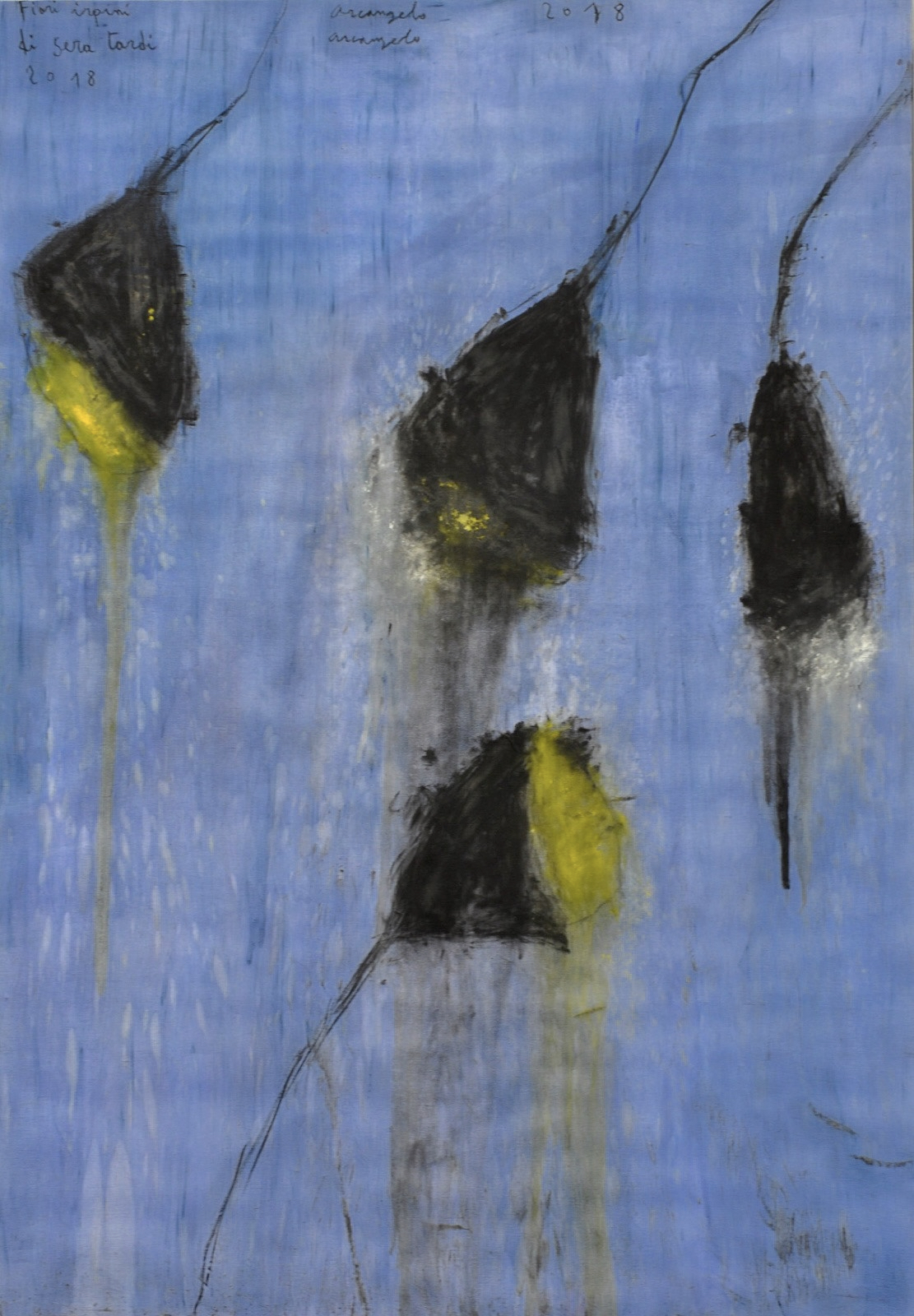
The Fiori irpini appear as if rising from beneath the surface, like fissures opening across the canvas. The Irpinian earth becomes a living body: it breathes, fractures, and resurfaces. The flower is not a figurative motif but an inner chromatic force, a layered presence emerging from an ancient, almost primordial depth.
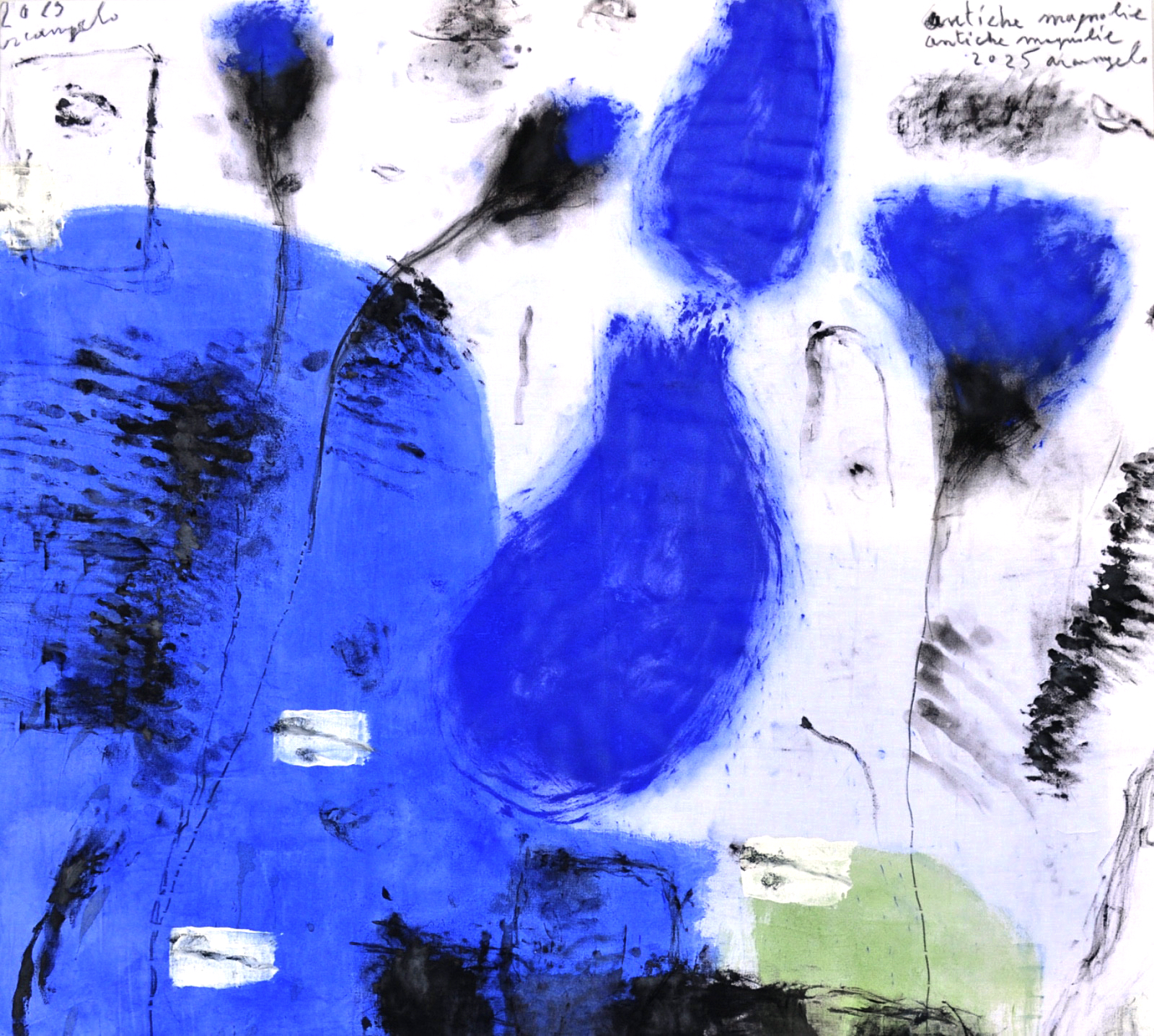
The Magnolie mark a decisive shift. Dark stratification gives way to luminous openness. Their white grounds, traversed by blues and greens, suggest an airy field in which form no longer sinks into matter but hovers, vibrates, and circulates across the surface.
The contrast between the Fiori irpini and the Magnolie structures the exhibition. On one side, a dense and primordial earth; on the other, an atmospheric and contemplative register. The exhibition unfolds within this tension.
The small Paesaggi occupy a transitional position. Through concise painterly gestures, they evoke landscape without fixing it into image, maintaining a balance between material presence and atmospheric suggestion.
In this sense, Ubi terra floret acquires a layered meaning. The earth flowers not only through its material density but also through its capacity to transform into light, air, and suspended colour. Flowering becomes a continuous unfolding between rootedness and emergence.
Within this dialectic, Arcangelo’s painting is defined by tension rather than resolution, transformation rather than equilibrium. Fiori irpini and Magnolie are not subjects but two complementary ways of activating landscape within painting: one grounded in earth, the other opening toward atmosphere – both necessary.
Artist Biography
Arcangelo, was born in Avellino, Italy, in 1956. He studied at the Academy of Fine Arts in Rome, graduating in 1980, and moved to Milan in 1981, where he developed his artistic practice. His work spans painting, sculpture, ceramics, and mixed media, with a recurring exploration of the relationship between earth, memory, spirituality, and ancestral cultures. His early cycle Terra mia (My Earth) established his distinctive language, incorporating natural materials, pigments, and symbolic forms.
Arcangelo presented one of his first solo exhibitions in 1984 Galerie Tanit Munich, alongside Galerie Buchmann in Basel. Since then, Galerie Tanit has continued to represent and exhibit his work, positioning his practice within its program. His work has been presented in major institutions including the PAC – Padiglione d’Arte Contemporanea in Milan, Musée d’Art Moderne in Toulouse, Galleria Civica di Modena, Galleria Civica d’Arte Contemporanea di Trento, MAGA – Museo Arte Gallarate, La Ferme du Buisson contemporary art centre in France, and the Art Museum of Fukuyama in Japan.
Artists
Image Gallery
Arcangelo
Antiche Mangolie
2025
Mixed Media on Canvas
107 cm x 123 cm
Arcangelo
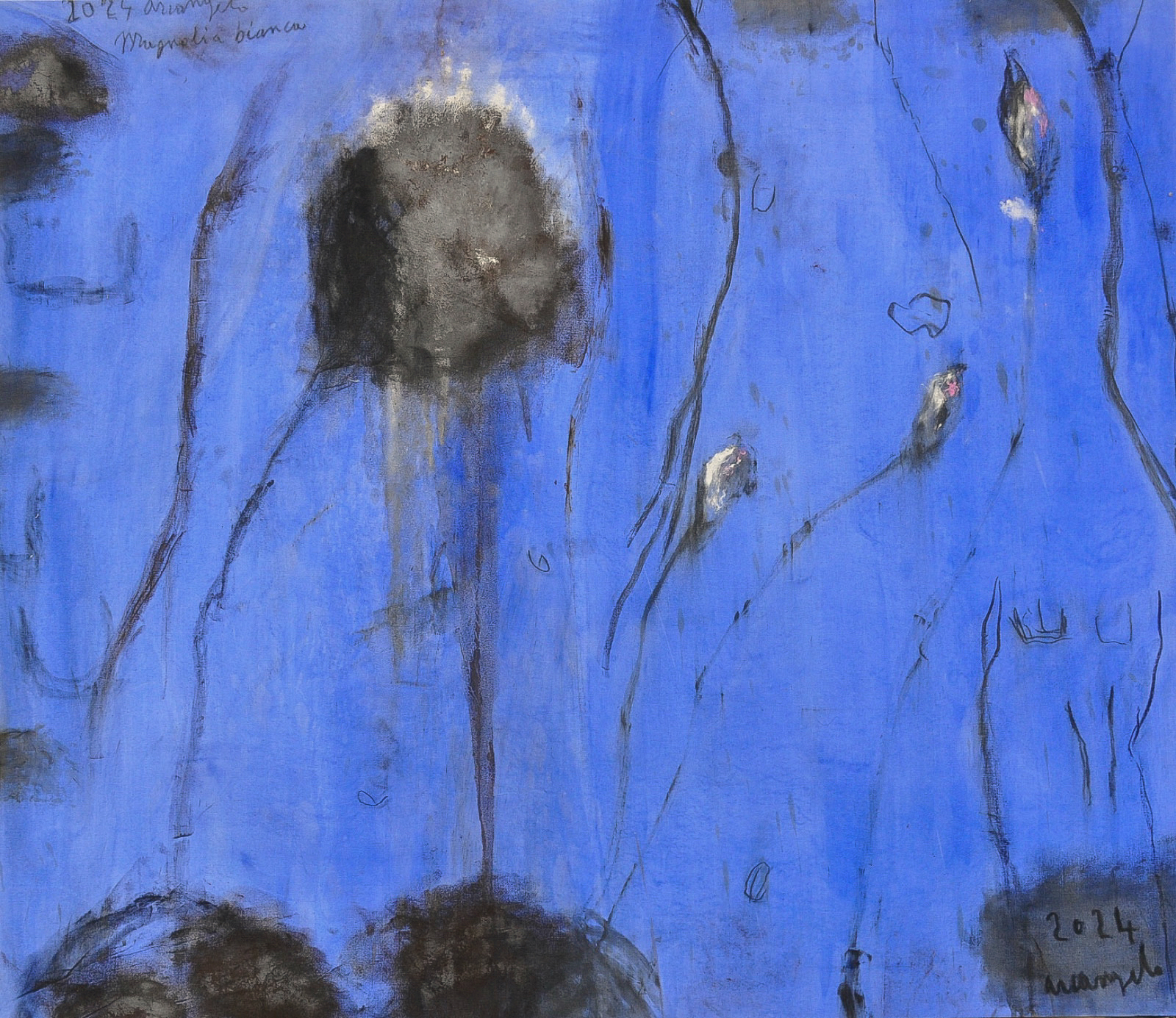
Magnolia Bianca
2024
Mixed Media on Canvas
110 cm x 128 cm
Arcangelo
Mangolia Bianca
2024
Mixed Media on Canvas
110 cm x 128 cm
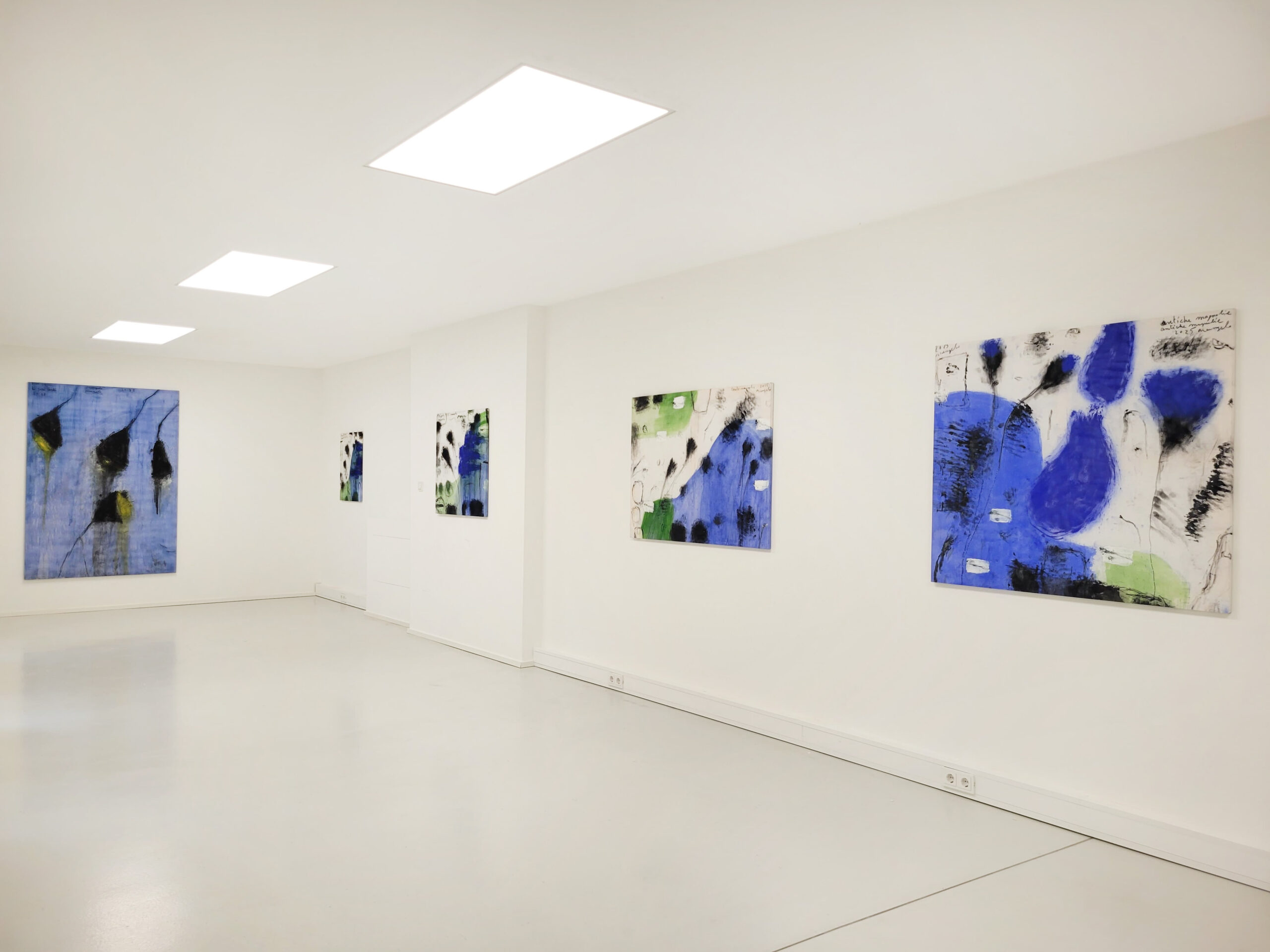
Arcangelo
Ubi Terra Floret
Exhibition View
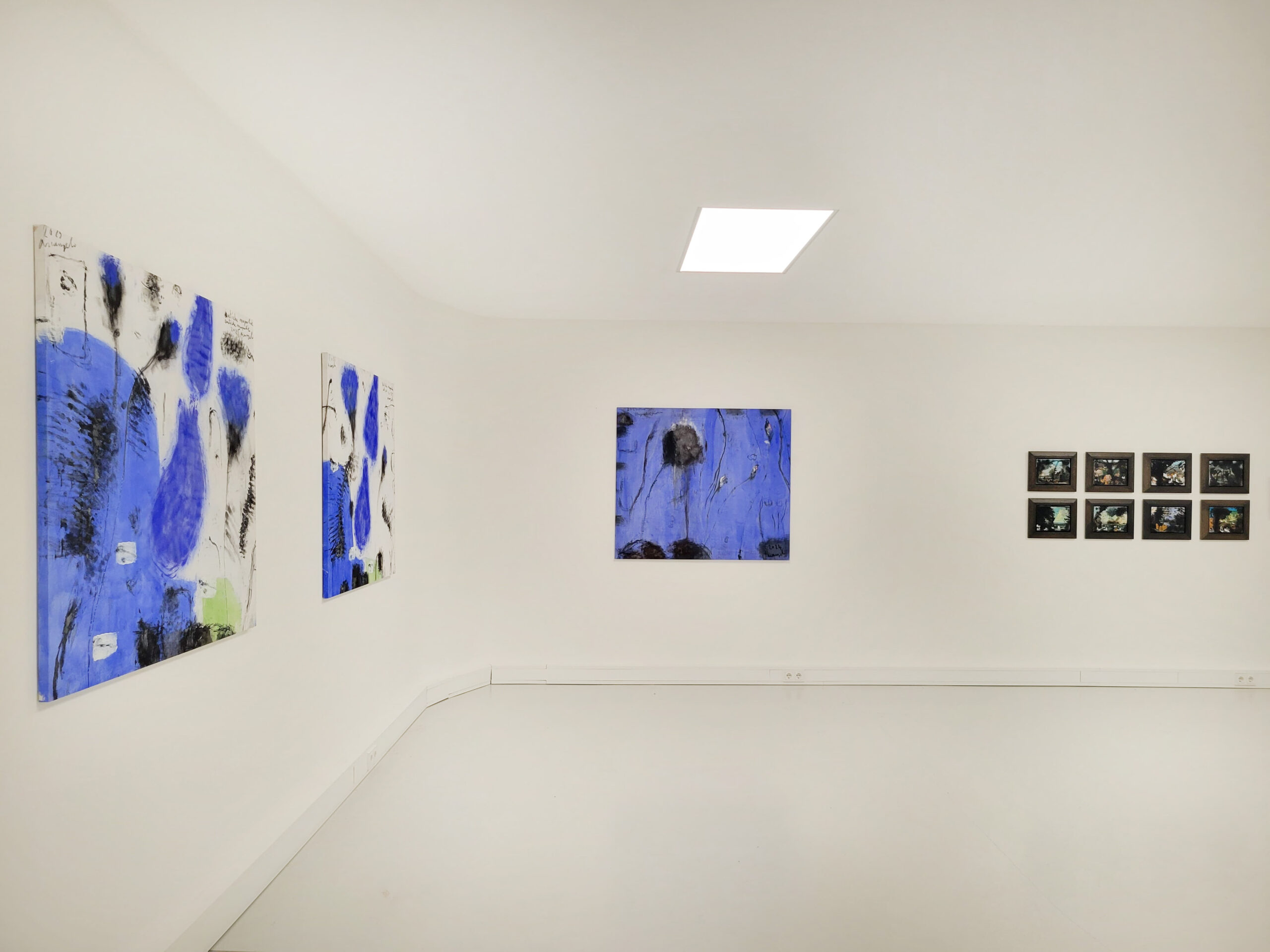
Arcangelo
Ubi Terra Floret
Exhibition View
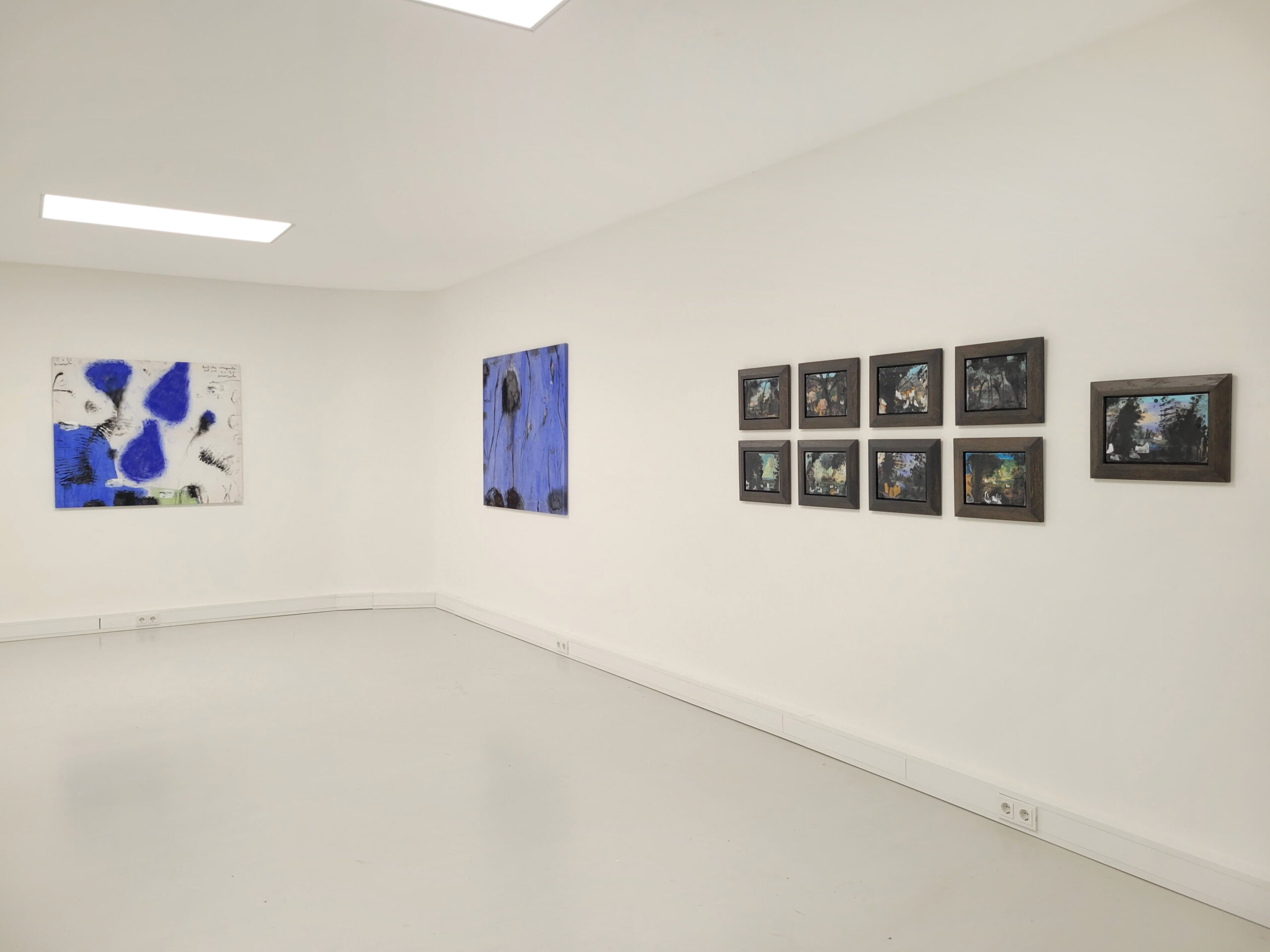
Arcangelo
Ubi Terra Floret
Exhibition View
Subscribe to our newsletter for ongoing updates on our artists and exhibitions